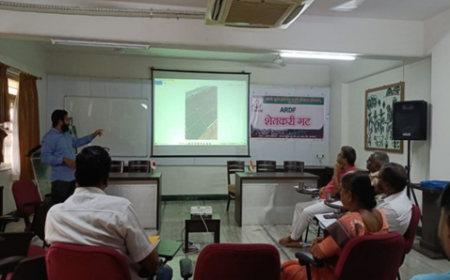
Seminar on “Agricultural Education in India & USA – What can we learn?”

The Aspee ARD Foundation takes immense pride in the remarkable achievements of its Fellowship and Scholarship recipients, many of whom now hold prestigious positions in India and abroad. Dr. Sreekala Bajwa is one such distinguished alumna. Bajwa earned a bachelor’s degree from Kerala Agricultural University in India, her Master's Degree from the Indian Institute of Technology, Kharagpur, and her Doctoral Degree in Agricultural Engineering from the University of Illinois at Urbana–Champaign, USA. Her outstanding academic and professional accomplishments exemplify the impact of the Foundation's support in nurturing future leaders.
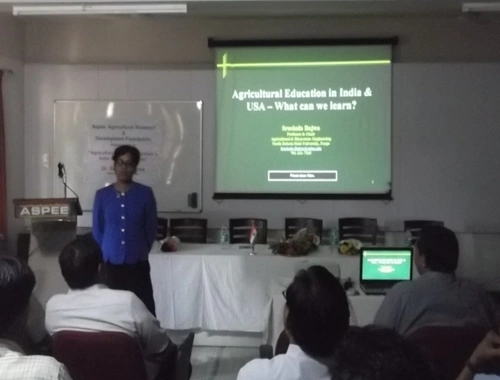
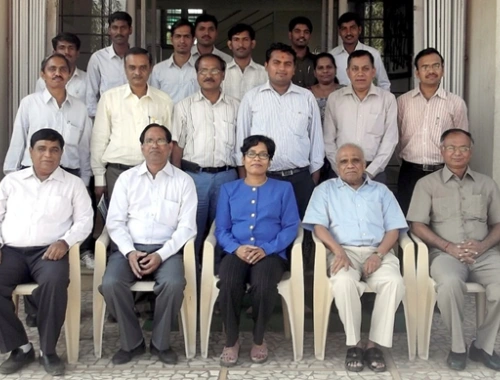
At present Dr. Sreekala Bajwa serves as the Vice President for agriculture, Dean of the College of Agriculture and Director of Montana Agricultural Experiment Station at Montana State University. Her leadership is focused on aligning the college with the land-grant mission of serving the needs of the constituents in Montana and beyond through transformational education and outreach, and impactful research. She is a strong advocate of access to education and research outcomes to people across Montana and beyond. Bajwa is an agricultural engineer with research expertise in precision agriculture and agricultural byproduct utilization. Prior to joining MSU, Bajwa served as the chair of the Department of Agricultural and Biosystems Engineering at North Dakota State University, and as a faculty member at the University of Arkansas.

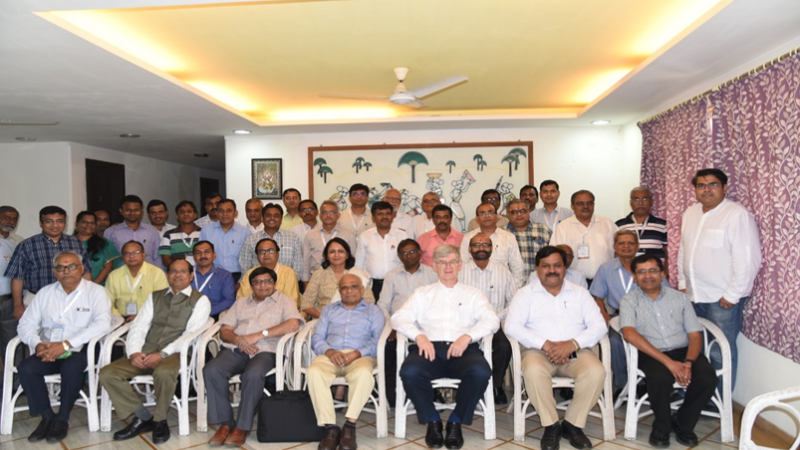
Aspee Foundation had invited her to have a seminar on “Agricultural Education in India & USA – What can we learn?” where experts from Agril. Engineering faculty participated.  
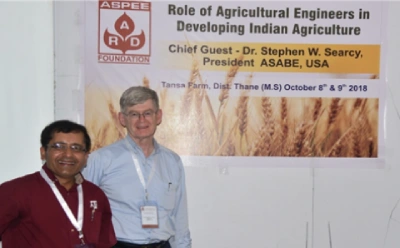
A seminar on Enhancing Role of Agricultural Engineers in Developing Indian Agriculture

A two day seminar was organized on October 2018 at the Aspee Agricultural Research & Development Foundation Farm (Tansa Farm). The theme of the seminar was, “Enhancing Role of Agricultural Engineers in Developing Indian Agriculture”.

Chief Guest Dr. Stephen Searcy and Dr.Anish Jantrania from Texas A& M University from USA.
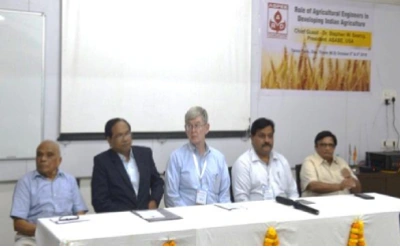
(L-R) Shri.Sharad L.Patel Director, Aspee Foundation, Dr. N.C. Patel, VC, Anand Agrl.University, Anand, Gujarat, Dr. Stephen Searcy, President ASABE, USA, Dr. Indra Mani Mishra, President, ISAE, New Delhi and Shri. Kiranbhai Patel, Director, Aspee Foundation
Seminar 05
Seminar 06
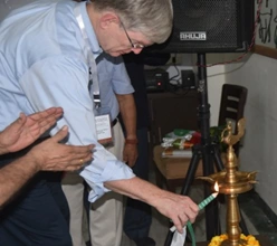
Lightening of lamp by Chief Guest Dr. Stephen Searcy and welcome by Shri. Sharad Patel.
Seminar 07
Seminar 08
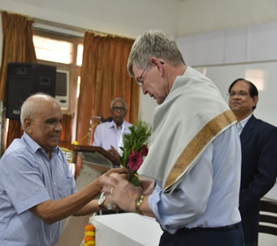
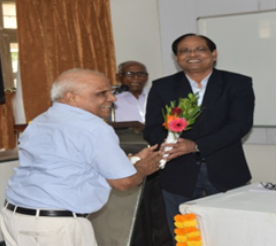
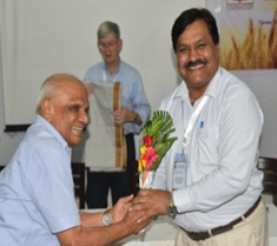
Shri. Sharad Patel Director Aspee Foundation welcoming the guest of honour (L-R) Dr. N.C.Patel, Vice Chancellor, Anand Agril. University, Anand and Dr.Indra Mani Mishra, President, ISAE, New Delhi

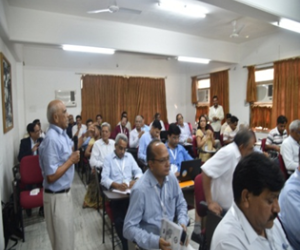
Dr. Stephen Searcy, Prof.& Head, Dept. of Agricultural and Biological Engineering at Texas A & M University, USA and President, American Society of Agricultural and Biological Engineers, USA participated in the seminar as the Guest of Honor. Also participated from Texas A & M University from USA was Dr. Anish Jantrania. A total of 30 delegates from SAUs, ICAR Institutes, Industries and progressive farmers also participated in the seminar.

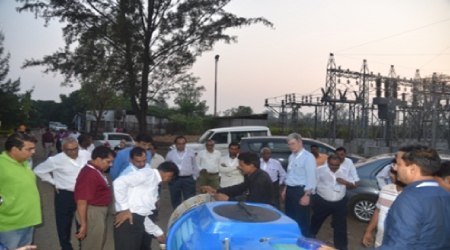
During the seminar, delegates visited the Tansa Farm and acquainted themselves with the research work conducted on rice and other fruits crops, irrigation facilities, animal husbandry, vermicompost unit, mango grafting nursery program, etc. and expressed immense satisfaction. They also visited the manufacturing, assembling and calibration of various plant protection appliances in different units.

Seminar 05
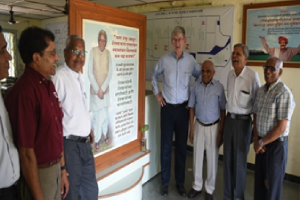
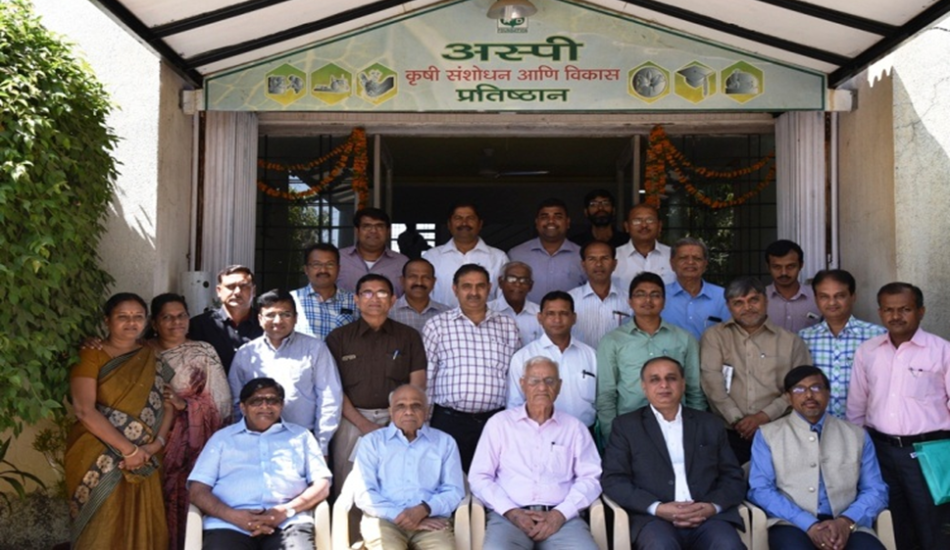
Delegates in front of photo of Founder of Aspee Group late Shri L.M.Patel. (L-R)
Seminar 07
Seminar 08
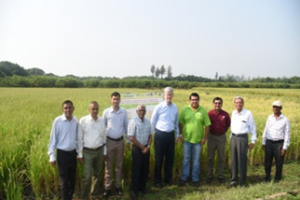
Delegates visited the Tansa Farm, Experimental Fields and the Vermicompost unit.

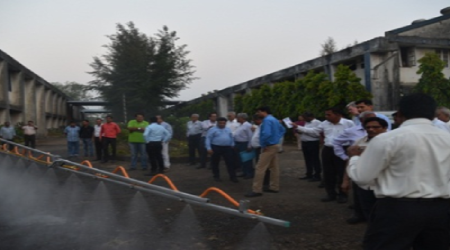
Finally, manually and machine operated modern appliances manufactured by different units were demonstrated to the delegates who intern expressed their great satisfaction and feelings on awareness of new technologies developed by Aspee.

Seminar 07
Seminar 08
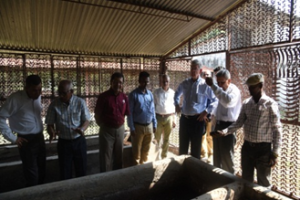
Demonstration farm equipments by Shri. Jatin Patel, Tech.Director, Aspee Group of Companies.

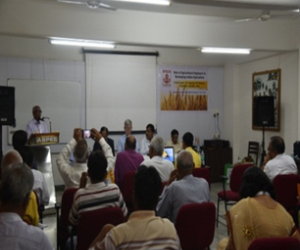
The seminar was conducted in two technical sessions in which delegates presented their research papers. There were twelve such presentations on different aspects such as farm mechanization, sustainable agricultural development, mechanization in horticultural crops, web based and mobile applications for precision irrigation, silage and its advantages to farm animals, smart agriculture and advanced technology, agricultural mechanization in India & way forward, etc.

Shri. Vimal Chawda, VNR Seeds, Raipur
Dr. R. B. Dumbre welcoming and giving a introductory remark.
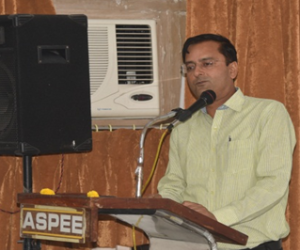
Shri. Sharad Patel sharing his views.
Seminar 07
Seminar 08
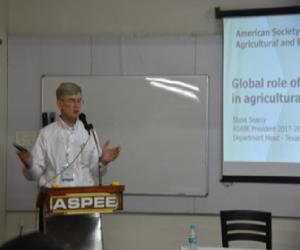
Dr. Stephen Searcy, Chief Guest addressing the delegates.
Seminar 05
Mr.Jatin Patel briefed about the activities of Aspee Group of Companies

A keynote address was delivered by Dr. Stephen Searcy on, The Role of Agricultural Engineers in Global Development. Each paper aroused good interactions and discussions. The Aspee proposed to bring out in a book form the proceedings of the seminar.

Finally a documentary on the life of late Shri. L.M. Patel was screened which was attended and appreciated by the delegates.

Seminar 07

Workshop on “Strengthening Bonds between Aspee Foundation and KVK” – 25th & 26th February 2017

Dr Krishan LaL Chadha, The Man Behind The Horticultural Renaissance Of India, A name synonymous with Indian Horticulture, Dr. K L Chadha spearheaded it towards “Golden Revolution". An icon and doyen, Dr. Chadha has steered policy, planning, research and development of horticulture in India for almost five decades. For his yeomen’s service for bringing Horticulture Revolution in India, Dr. Chadha was conferred the prestigious Padma Shri on March 22, 2012.

We were very honoured to have such eminent Scientist Dr. K.L.Chadha in this Workshop on “Strengthening Bonds between Aspee Foundation and KVK” . The workshop was attended by Head of ATARI, New Delhi and South as well as Programme Coordinators and Head of Krishi Vigyan Kendra of Maharashtra, Gujarat, Madhya Pradesh and Karnataka.

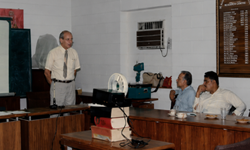
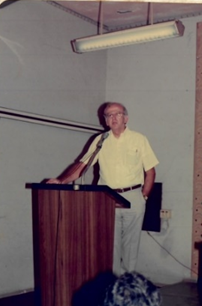
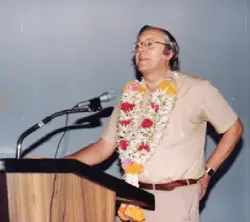
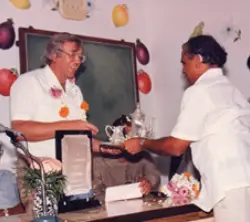
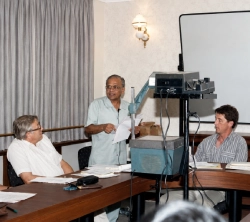
Seminar on “Droplet Charging & Electrostatic Deposition of Agricultural Pesticide Sprays” By Prof. S. E. Law 13th & 15th September 1989

In September 1989, the Aspee Research Institute organized a landmark seminar on “Droplet Charging & Electrostatic Deposition of Agricultural Pesticide Sprays”, conducted by Prof. S. E. Law of the Driftmier Engineering Center, University of Georgia, USA. Prof. Law, the inventor of the electrostatic spray nozzle, shared his pioneering research and technological advancements with participants, including executives from leading pesticide manufacturing companies.

During the seminar, Prof. Law explained the scientific principles behind electrostatic spraying technology. A tiny annular electrode embedded within an insulated nozzle creates an intense electrical field. As spray droplets are formed inside the nozzle, they acquire a negative electrical charge through electrostatic induction. These charged droplets are then propelled towards the crop canopy by a stream of compressed air.

The negatively charged spray cloud induces a positive charge on the grounded plant surface, creating a natural electrostatic attraction between the plant and the spray droplets. As a result, the pesticide droplets are drawn efficiently to the plant, ensuring superior deposition and coverage. A key advantage of this technology is that it not only increases the amount of pesticide deposited on the crop but also distributes it more uniformly across plant surfaces. By combining the forces of electrostatics and compressed air, the spray penetrates deep into dense plant canopies and reaches the undersides of leaves—areas where insects and disease-causing organisms commonly thrive.

The seminar highlighted the immense potential of electrostatic spraying technology in improving pesticide application efficiency, reducing wastage, enhancing crop protection, and promoting more sustainable agricultural practices.

Workshop on Small Sprayers: Standards, Safety and Future Directions

ASPEE House, Mumbai | 18–20 November 1982

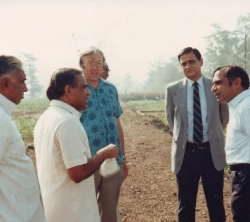
A three-day international workshop on “Small Sprayers: Standards, Safety and Future Directions” was held from 18th to 20th November 1982 at the facilities of American Spring & Pressing Works Pvt. Ltd. (ASPEE) and the ASPEE Research Institute, Mumbai.

The workshop was sponsored by the Asian Development Bank (ADB) through a grant to the Agricultural Engineering Division of the International Rice Research Institute (IRRI), Philippines. It brought together leading experts, researchers, manufacturers, and representatives from agricultural organizations to address critical issues relating to small pesticide sprayers in Asia.

Among the distinguished participants were Dr. Graham A. Matthews and Dr. Y. P. Ramdev, who attended by special invitation of the convenor.

Objectives of the Workshop

The workshop focused on the following key objectives:

  1. Development of Standards: To formulate draft minimum standards and specifications for Lever-Operated Knapsack (LOK) sprayers suitable for adoption across Asian countries.
  2. Assessment of Current Status: To review and evaluate the prevailing conditions, challenges, and technological developments affecting small sprayers in Asia.
  3. Training and Capacity Building: To develop training strategies for all stakeholders associated with small sprayers, including:
    • Small-scale manufacturers
    • Agrochemical companies
    • Government agencies
    • Farmers and end-users
  4. Implementation Framework: To establish guidelines and recommendations for future projects that would ensure the effective implementation and maintenance of workshop outcomes.
Workshop on Small Sprayers
Dr. Graham A. Matthews
Observations on Pesticide Application Technology

During the workshop, Dr. Graham Matthews presented an overview of the role of pesticide application technology within the broader framework of Integrated Pest and Farming Technology (IPFT). He emphasized that advances in application technology depend not only on research but also on continuous innovation by manufacturers of spraying equipment.

Dr. Matthews had the opportunity to visit the manufacturing facilities of ASPEE and was guided through the plant by Sharad Patel. At the time, ASPEE was India's leading manufacturer of agricultural application equipment, employing more than 400 personnel at its 9-acre manufacturing complex. The company supplied nearly 90 percent of the Indian market and had established export operations, particularly in East Africa.

Dr. Matthews expressed particular appreciation for ASPEE’s commitment to quality assurance. The company's products were manufactured and tested in accordance with the requirements of the Indian Standards Institution, with every unit undergoing rigorous individual inspection before dispatch.

He also acknowledged the establishment of the ASPEE Research Institute at Ganeshpuri, which was created to promote knowledge and research in agricultural engineering and pesticide application technology. The Institute reflected ASPEE’s long-term commitment to advancing agricultural mechanization, safety, and farmer education.

Panel Discussion on Training Strategies

A special panel session on “Effective Training Strategies for Organizations and Small Sprayer Users” was conducted to examine approaches for improving operator skills, safety awareness, and technology adoption.

The session was coordinated by Dr.Evan Thornhill, with contributions from Dr. Jeff Hastings and Dr. Graham A. Matthews. Discussions emphasized the importance of structured training programs, user education, equipment maintenance, and safe pesticide application practices to improve agricultural productivity while minimizing environmental and health risks.

Significance

The workshop represented an important milestone in promoting safer, more efficient, and standardized pesticide application practices across Asia. It highlighted ASPEE’s growing role as a leader in agricultural engineering and its commitment to supporting research, innovation, training, and international collaboration in the field of crop protection and farm mechanization.

Farmer's Club

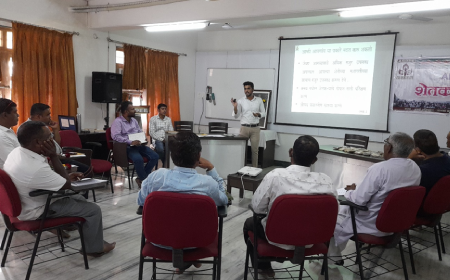
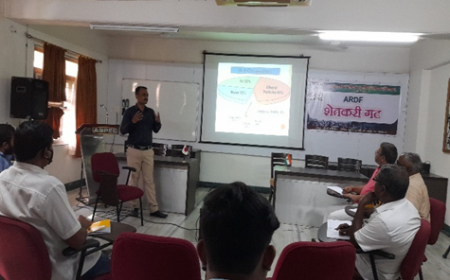
The Farmer’s Club is a club where all the information will be collected by the farmers from the basic level in their village. In order to reach out to the local villages the Aspee Foundation formed a Farmers’ Club consisting of 10 farmers from the surrounding villages and formed an Aspee Farmers’ Club, during the month of July, 2021.

It was decided that the farmers will meet once in a month and discuss regarding the problems, what crops they will grow during Rabi and Kharif season. Each time during the meeting an expert was invited to give more informative guidance to the farmers. Dr. Parag and Aspee young and motivative Awardee Shri. Prasad Save were invited during the meeting to interact with the